
In your CBAM report, the transport carbonfield is still blank.
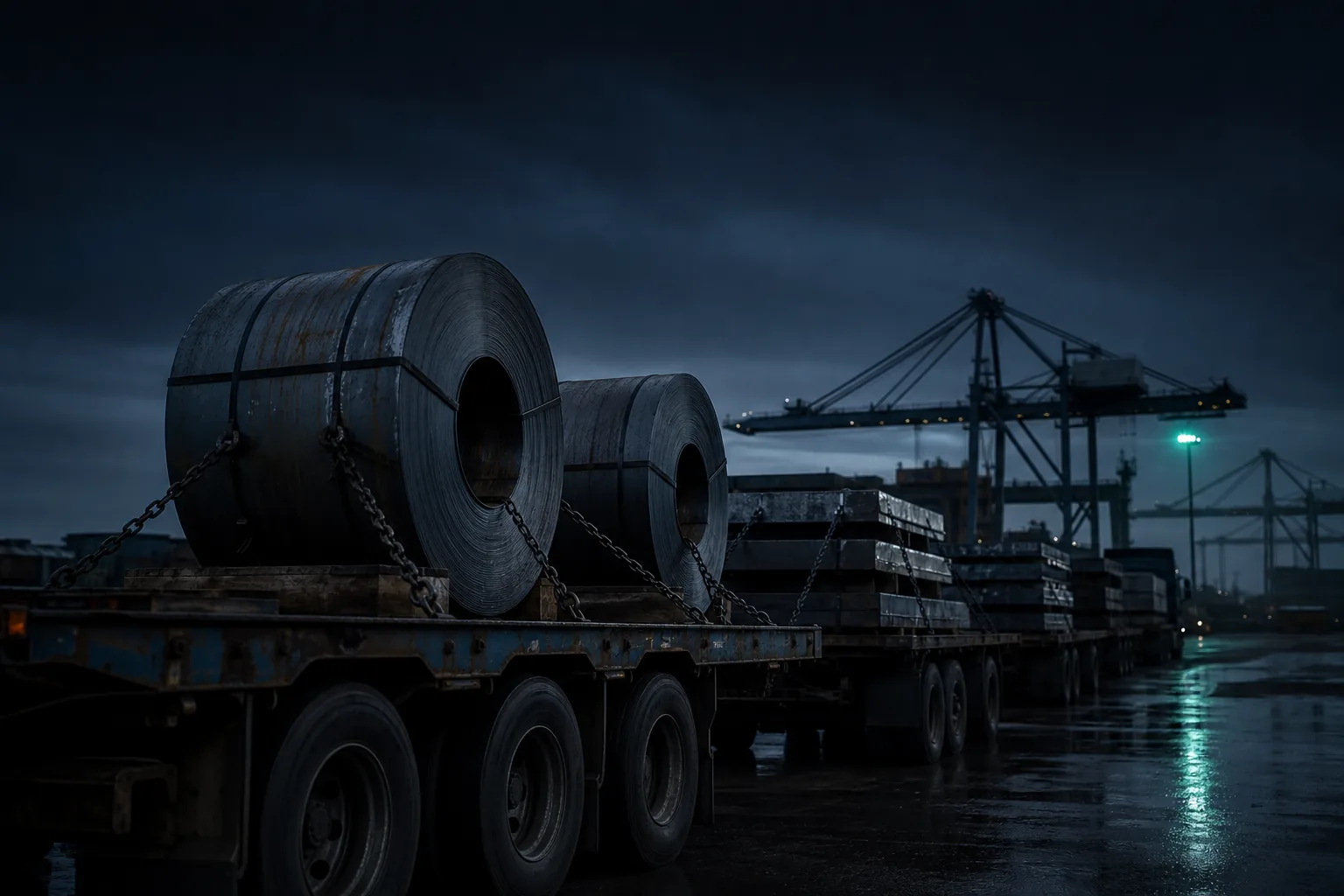
An EU buyer has demanded transport carbon statements as CBAM documentation, starting with the next shipment.
- High-volume bulk transport estimated with average factors
- No supporting evidence for the CBAM transport line
- Manual, imprecise ton-km allocation
- Verification flags the figures as estimates
- Bulk transport measured by DTG
- Precise allocation on measured ton-km
- Automated reporting in CBAM and CSRD formats
- Deterministic calculations that reproduce years later
Here's how it fits your industry.
A CBAM report with transport carbon filled in — protecting your EU exports.
The supply chain changes when shippers demand the carbon data.
Most transport emissions come from vehicles the shipper never drives. That data only turns from estimate to measurement when the shipper asks for it as a term of business.
Draw the boundary at paid freight
Only transport you paid a freight charge for is the correct boundary for a shipper's Scope 3 report. LCS draws that boundary cleanly — no gaps, no double counting.
Classify by measurement, not estimation
Instead of average factors, we use data measured directly at the vehicle, classified precisely by transport mode and leg. A single ISO 14083 method that passes verification.
Require it of subcontractors
When a shipper requires measured data as a term of contract, the whole supply chain shifts from estimate to measurement. The request is where change begins.
Don't make the ask alone.
As your partner, LCS gives you the grounds to require data from subcontractors — and gives them the tools to respond. We build the bridge to measurement between the shipper who asks and the carrier who answers.
The questions this industry asks most.
Do steel exporters have to report transport carbon under CBAM?
Steel is directly in scope for the EU Carbon Border Adjustment Mechanism (CBAM), which can require evidence not only for product emissions but for supply chain transport emissions. If you fall under CSRD, Scope 3 transport is also in scope. LCS measures bulk transport at the vehicle with DTG and calculates under ISO 14083.
Why does estimating high-volume bulk transport with average factors get flagged?
Bulk transport has wide swings in loaded weight and distance, so the error in average factors accumulates straight into the emissions figure. Verification then flags it as an estimate and trust is lost. Allocating on measured ton-km gives a figure with a clear basis.
How does the paid-freight boundary apply in steel logistics?
Only bulk transport you paid a freight charge for is the correct boundary for a shipper's Scope 3. LCS separates paid-freight legs to draw that boundary and allocates on measured ton-km, filling CBAM and CSRD formats without double counting.
How do we get bulk carriers to report their data?
Carriers respond when the shipper requires measured data as a shipment or contract term. LCS installs DTG on bulk vehicles or consolidates their data, building a bridge between the shipper who asks and the carrier who answers.
Fill the transport field before the next shipment.
We assess your industry's transport carbon regulations and your path to measurement, together.