
The route it took for safetydisappears from the carbon report.
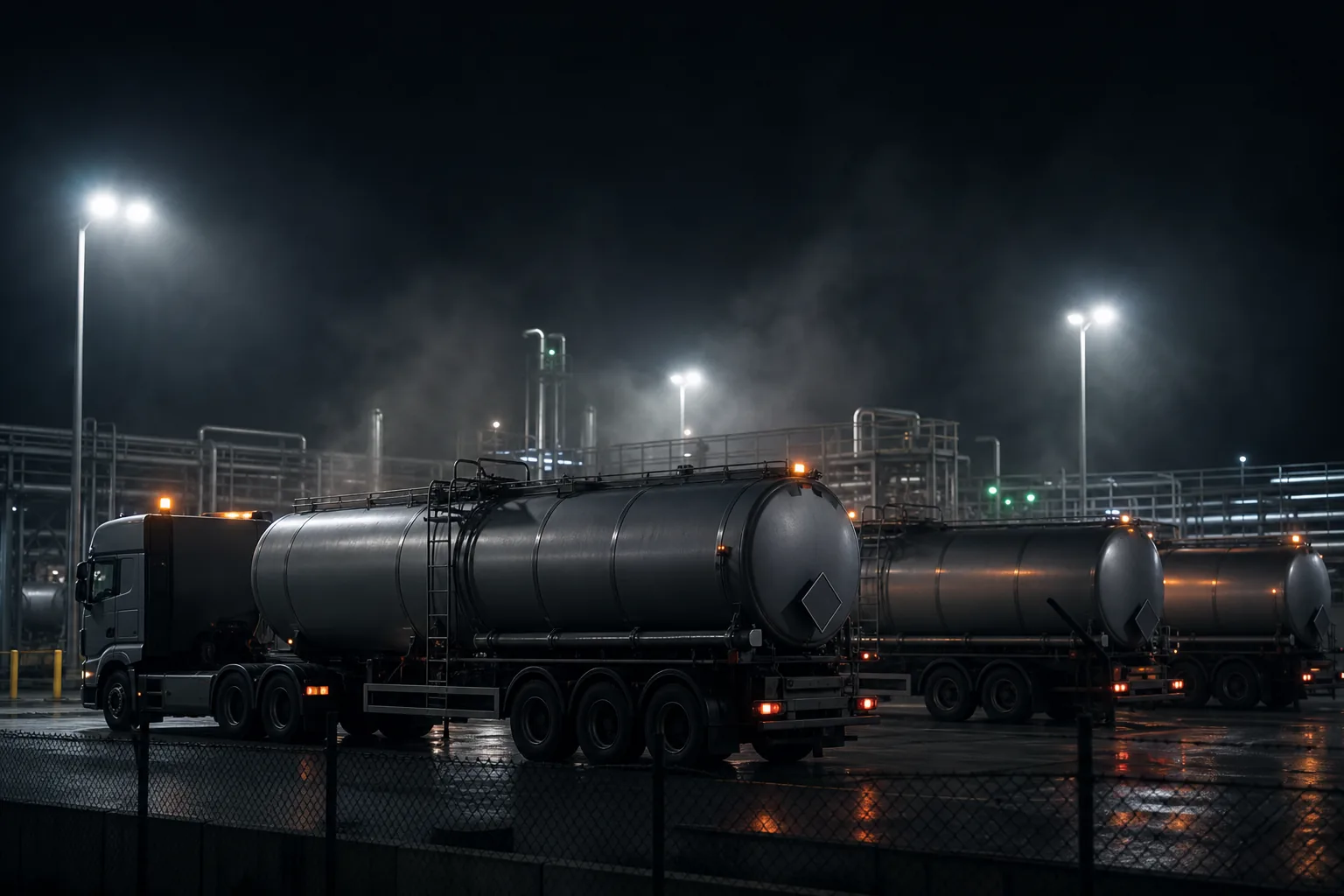
A shipper has asked for hazmat transport carbon with loaded and empty legs split.
- Detour and low-speed running estimated with an average
- Empty return legs never captured
- Safety and carbon records kept apart
- Unclear loaded-versus-empty boundary
- Hazmat actual fuel and route measured by DTG
- Loaded and empty legs separated by measurement
- Detour and low-speed calculated on actual fuel
- Verifiable reporting under ISO 14083
Here's how it fits your industry.
Split loaded from empty — reporting the true emissions of hazmat.
For hazmat and explosives, safety weighs as much as carbon
With dangerous goods and explosives, a single accident stops the whole operation. LAS (Logistics AI Standard) supports safe transport with safety data from the same DTG measurement — helping dispatch vehicles with proven harsh-acceleration and braking records and high safety scores, and lowering the accident rate itself with routes that avoid black-ice risk zones and accident-prone segments.
Dispatch support based on measured safety scores — vehicles without data are excluded from hazmat dispatch
Routes that avoid black-ice risk zones
Routes that avoid accident-prone segments
LAS is a AX product line in development. Dispatch is recommendation-based — the final call stays with your team.
Explore LAS →The supply chain changes when shippers demand the carbon data.
Most transport emissions come from vehicles the shipper never drives. That data only turns from estimate to measurement when the shipper asks for it as a term of business.
Draw the boundary at paid freight
Only transport you paid a freight charge for is the correct boundary for a shipper's Scope 3 report. LCS draws that boundary cleanly — no gaps, no double counting.
Classify by measurement, not estimation
Instead of average factors, we use data measured directly at the vehicle, classified precisely by transport mode and leg. A single ISO 14083 method that passes verification.
Require it of subcontractors
When a shipper requires measured data as a term of contract, the whole supply chain shifts from estimate to measurement. The request is where change begins.
Don't make the ask alone.
As your partner, LCS gives you the grounds to require data from subcontractors — and gives them the tools to respond. We build the bridge to measurement between the shipper who asks and the carrier who answers.
The questions this industry asks most.
How is hazmat transport carbon calculated under ISO 14083?
ISO 14083 calculates greenhouse gases from the actual fuel of a transport leg. Hazmat involves many detours, low-speed sections, and empty return runs, so that special running has to be reflected in the emissions. LCS measures actual fuel at the vehicle with DTG at 1-second (1-Hz) resolution and calculates with loaded and empty legs separated.
Why is calculating hazmat transport with average factors inaccurate?
Because of safety rules, hazardous-material transport takes many detour routes, low-speed sections, and empty return runs, so the gap between average factors and real emissions is large. Empty return legs in particular never show up in average factors. DTG measurement reflects the actual fuel and route as they are.
What does LCS measure versus standard-calculate for hazmat?
Hazmat vehicles are measured for actual fuel and route at 1-second resolution by DTG, with loaded and empty legs calculated separately. Even detour and low-speed running is reflected on actual fuel, producing verifiable emissions under ISO 14083.
How do we get hazmat transport data?
Connect DTG to the OBD-II of hazmat vehicles to measure actual fuel and route, and Cloud calculates with loaded and empty split. Carbon data is secured separately from safety regulation and consolidated into the shipper Scope 3 reporting.
Down to the detour and empty legs — by measurement.
We assess your industry's transport carbon regulations and your path to measurement, together.